


fubsy
Aug. 28th, 2026 08:11 am![[personal profile]](https://www.dreamwidth.org/img/silk/identity/user.png) prettygoodword
prettygoodwordfubsy (FUHB-zee) - (UK) (arch. or dial.) adj., short and stout.
With a side connotation of squat. In its time, somewhat slangy, but I'm not getting a clear picture of just how much past its expiration date we are. Regardless, it dates from the 1770s, adjectival form of the fully obsolete slang fubs/fub, chubby person, especially a child.
---L.
With a side connotation of squat. In its time, somewhat slangy, but I'm not getting a clear picture of just how much past its expiration date we are. Regardless, it dates from the 1770s, adjectival form of the fully obsolete slang fubs/fub, chubby person, especially a child.
---L.
Four Roleplaying Games That Did Something Right
Aug. 28th, 2026 10:38 amjames_davis_nicoll
A few key innovations and improvements that made gameplay more enjoyable...
Four Roleplaying Games That Did Something Right
Weird Fishes by Rae Mariz
Aug. 28th, 2026 07:58 amjames_davis_nicoll
Is there life in the Above, many kilometres above the ocean's depths? Abyssal scientist/explorer Ceph intends to find out in person.
Weird Fishes by Rae Mariz
New World: Military Communication
Aug. 28th, 2026 08:02 amswan_towerUniforms, heraldry, flags. In a military context, these all serve the crucial purpose of communication. And if they seem like fairly primitive methods of achieving that, well, for most of history, primitive methods are all we've had.
When it comes to communication -- whether that's signaling to troops on the battlefield or sending a message to a different part of your force elsewhere -- your options are fundamentally three: it can be visual, auditory, or written (a special case of visual). Touch and taste are far too short-range to be of any use, and while scent can theoretically travel farther, our olfactory senses are too poor to make much use of it. Even an alien species gifted with a better nose would face the problems of slow movement and dissipation over distance, reducing the signal's utility.
Written communication is great in some ways, terrible in others. So long as everybody involved is literate, the message won't get garbled in transmission: excellent! Unfortunately, it's also vulnerable to being intercepted, altered, even forged outright. Prior to modern times, it's also slow, being limited to the speed of whatever's carrying it, whether that's a guy on foot, a rider, or a pigeon (which, as Year Four discussed, only works in very specialized circumstances). Writing is handy for sending a message to another military detachment, but you're not going to be able to use it to communicate with the guys currently locked in combat.
What about visual signals more broadly? Movies give us tons of examples of a flag being raised or waved to communicate with the troops . . . but those examples are often deeply flawed, with the same movement of the same flag having the magical ability to communicate whatever is needed in the moment. Worse still is the version where the commander just lifts his arm, and suddenly thousands of men know it's time to march forward.
Visual signals only work if you can see them. Which sounds like an obvious statement, but now imagine that the flag -- much less the raised arm! -- is two, three, ten football fields away from you. (Doesn't matter which type of football. The point holds regardless.) How well can you see it? Remember that battle lines can get extremely long when the armies involved are big; are your eyes good enough to pick out a bit of cloth half a mile or more away? Are you looking in the right direction when the signal goes out? What about when you march forward, and now the flag is behind you?
Flags and similar kinds of standards, like the Roman legionary eagles, mostly get used at much shorter range, to drive individual smaller units. Your standard-bearer is at the front of your group's block, not the back; when the flag advances, so do you. When it stops, you stop. When it retreats, you retreat. (When it falls, you say oh shit. And then probably try to pick it up, or hope one of your buddies does.) It's useful for moving a limited mass of soldiers around, but you can't use it to transmit orders from the commander to that mass.
There are other visual ways to signal, e.g. by sending flares up into the sky, but you get the idea. Any such method is subject to these limitations on the battlefield, while over longer distances, you're looking at the kinds of communication systems described in Year Eight. They are, generally speaking, blunt instruments at best, not capable of delivering complex information or instructions.
So what about sound? You won't be surprised to hear me say this also has problems. Speech only goes so far; studies suggest that if you have a close-packed and quiet crowd and a good set of lungs, your voice might carry to a few thousand people, but "close-packed and quiet" does not describe battlefield conditions, nor communication at a distance. It's a little unclear how long ago speaking trumpets (megaphones) were invented, but even those only boost your range a little.
Musical instruments do better, and they don't require you to be facing them to receive the signal. As with flags, though, your "vocabulary" is limited, because relying on a complex melody to communicate "third unit of cavalry, circle around the army's flank to intercept their reserves" is not so much courting failure as doing a swan dive into failure's arms. It also turns out that, like flags, instruments have mostly been used to control the movements of smaller units: you're only being cued to move if it's your group's horn or drum sounding the advance or retreat. (I presume, though I don't know, that you know it's yours because it's loud enough to be obviously nearby, as opposed to farther down the field.) Once again, the commander can't really use this to send orders from his post, because which group is he trying to signal?
Pretty much the only thing he can use is a messenger. Send someone on foot or on horseback with orders (written or verbal), and hope the messenger doesn't get captured, killed, or ignored by the officer on the receiving end, who's annoyed that some lackey claims he's supposed to change his plans or move into action. There's a reason we have that idiom about "don't shoot the messenger" . . .
With all of this in place, you can see why modern technology had such a revolutionary effect on warfare. Telegraphs and radios, not to mention their later successors, mean that suddenly you can transmit your written or auditory signals vastly quicker -- and that goes both ways! I've been talking as if everything is supposed to go from the commander to the troops, but he needs updates, too, and being able to send word more or less instantaneously that the center is collapsing or the right wing is about to be flanked opens up a whole new world of tactical responses.
Because if you were wondering how anybody managed when signaling was so crude and inefficient, the answer genuinely is "they kinda didn't." If your communication is limited, your control is limited. You deploy your troops for battle and then press play, with maybe one or two tricks held in reserve; everything else is up to the guys in different spots on the field, because there's no way to manage more complex coordination and maneuvering.
But with every improvement in your signals, you acquire new options. Maybe your infantry units can not just advance, halt, and retreat, but wheel to face a new direction. Maybe you can tell in something like real time that your far-distant left is hard pressed, so you can dispatch reinforcements in time to do some good.
Which means that if you're writing speculative warfare, the communications aspect is vitally important. Do they have telepathy? Flying animals with more capabilities than homing pigeons? Long-distance scrying or satellite surveillance? Teleportation? Anything that can transmit detailed information faster than a guy on a horse is a major advancement in tactical and strategic capability over most of human history. Meanwhile, the weaknesses of that method open up fascinating possibilities for trouble: can it be intercepted, altered, forged entirely? How can you use that to screw over your characters, er, I mean, make their lives more interesting?

(originally posted at Swan Tower: https://www.swantower.com/2026/08/28/new-world-military-communication/)
When it comes to communication -- whether that's signaling to troops on the battlefield or sending a message to a different part of your force elsewhere -- your options are fundamentally three: it can be visual, auditory, or written (a special case of visual). Touch and taste are far too short-range to be of any use, and while scent can theoretically travel farther, our olfactory senses are too poor to make much use of it. Even an alien species gifted with a better nose would face the problems of slow movement and dissipation over distance, reducing the signal's utility.
Written communication is great in some ways, terrible in others. So long as everybody involved is literate, the message won't get garbled in transmission: excellent! Unfortunately, it's also vulnerable to being intercepted, altered, even forged outright. Prior to modern times, it's also slow, being limited to the speed of whatever's carrying it, whether that's a guy on foot, a rider, or a pigeon (which, as Year Four discussed, only works in very specialized circumstances). Writing is handy for sending a message to another military detachment, but you're not going to be able to use it to communicate with the guys currently locked in combat.
What about visual signals more broadly? Movies give us tons of examples of a flag being raised or waved to communicate with the troops . . . but those examples are often deeply flawed, with the same movement of the same flag having the magical ability to communicate whatever is needed in the moment. Worse still is the version where the commander just lifts his arm, and suddenly thousands of men know it's time to march forward.
Visual signals only work if you can see them. Which sounds like an obvious statement, but now imagine that the flag -- much less the raised arm! -- is two, three, ten football fields away from you. (Doesn't matter which type of football. The point holds regardless.) How well can you see it? Remember that battle lines can get extremely long when the armies involved are big; are your eyes good enough to pick out a bit of cloth half a mile or more away? Are you looking in the right direction when the signal goes out? What about when you march forward, and now the flag is behind you?
Flags and similar kinds of standards, like the Roman legionary eagles, mostly get used at much shorter range, to drive individual smaller units. Your standard-bearer is at the front of your group's block, not the back; when the flag advances, so do you. When it stops, you stop. When it retreats, you retreat. (When it falls, you say oh shit. And then probably try to pick it up, or hope one of your buddies does.) It's useful for moving a limited mass of soldiers around, but you can't use it to transmit orders from the commander to that mass.
There are other visual ways to signal, e.g. by sending flares up into the sky, but you get the idea. Any such method is subject to these limitations on the battlefield, while over longer distances, you're looking at the kinds of communication systems described in Year Eight. They are, generally speaking, blunt instruments at best, not capable of delivering complex information or instructions.
So what about sound? You won't be surprised to hear me say this also has problems. Speech only goes so far; studies suggest that if you have a close-packed and quiet crowd and a good set of lungs, your voice might carry to a few thousand people, but "close-packed and quiet" does not describe battlefield conditions, nor communication at a distance. It's a little unclear how long ago speaking trumpets (megaphones) were invented, but even those only boost your range a little.
Musical instruments do better, and they don't require you to be facing them to receive the signal. As with flags, though, your "vocabulary" is limited, because relying on a complex melody to communicate "third unit of cavalry, circle around the army's flank to intercept their reserves" is not so much courting failure as doing a swan dive into failure's arms. It also turns out that, like flags, instruments have mostly been used to control the movements of smaller units: you're only being cued to move if it's your group's horn or drum sounding the advance or retreat. (I presume, though I don't know, that you know it's yours because it's loud enough to be obviously nearby, as opposed to farther down the field.) Once again, the commander can't really use this to send orders from his post, because which group is he trying to signal?
Pretty much the only thing he can use is a messenger. Send someone on foot or on horseback with orders (written or verbal), and hope the messenger doesn't get captured, killed, or ignored by the officer on the receiving end, who's annoyed that some lackey claims he's supposed to change his plans or move into action. There's a reason we have that idiom about "don't shoot the messenger" . . .
With all of this in place, you can see why modern technology had such a revolutionary effect on warfare. Telegraphs and radios, not to mention their later successors, mean that suddenly you can transmit your written or auditory signals vastly quicker -- and that goes both ways! I've been talking as if everything is supposed to go from the commander to the troops, but he needs updates, too, and being able to send word more or less instantaneously that the center is collapsing or the right wing is about to be flanked opens up a whole new world of tactical responses.
Because if you were wondering how anybody managed when signaling was so crude and inefficient, the answer genuinely is "they kinda didn't." If your communication is limited, your control is limited. You deploy your troops for battle and then press play, with maybe one or two tricks held in reserve; everything else is up to the guys in different spots on the field, because there's no way to manage more complex coordination and maneuvering.
But with every improvement in your signals, you acquire new options. Maybe your infantry units can not just advance, halt, and retreat, but wheel to face a new direction. Maybe you can tell in something like real time that your far-distant left is hard pressed, so you can dispatch reinforcements in time to do some good.
Which means that if you're writing speculative warfare, the communications aspect is vitally important. Do they have telepathy? Flying animals with more capabilities than homing pigeons? Long-distance scrying or satellite surveillance? Teleportation? Anything that can transmit detailed information faster than a guy on a horse is a major advancement in tactical and strategic capability over most of human history. Meanwhile, the weaknesses of that method open up fascinating possibilities for trouble: can it be intercepted, altered, forged entirely? How can you use that to screw over your characters, er, I mean, make their lives more interesting?
(originally posted at Swan Tower: https://www.swantower.com/2026/08/28/new-world-military-communication/)
Film festival part ??
Aug. 28th, 2026 07:30 pmcaramarieI abandoned my watch order because I wanted to group these two together! (Also, wondering if I should watch Sunset Boulevard?)
Ok. So this was fun and I had a good time watching it but also...
( Read more... )
Up-and-coming director Kris has been hired to reinvigorate the ‘Camp Miasma’ slasher franchise (and provide some queer cred to counteract its chequered history). Hoping to bring on board reclusive actress Billy Preston from the first film, she drives out to Billy’s isolated home ... which turns out to be at the summer camp that was used as the model for Camp Miasma.
( Read more... )
In conclusion, after writing all this, I like Camp Miasma more after thinking about it, and I Want Your Sex less.
I Want Your Sex (d: Gregg Araki, 2026)
The film starts with a (maybe) murder: 23-year-old Elliot has woken to find his artist employer and dom Erika facedown in a pool. He’s dressed in women’s lingerie, and has to explain his and Erika’s relationship to the cops interviewing. Basically, she sexually harrassed him into being her sub. Basically, she rocked his world. And yeah, she ruined his life, but he didn’t kill her, he swears.Ok. So this was fun and I had a good time watching it but also...
( Read more... )
Teenage Sex and Death at Camp Miasma (d: Jane Schoenbrun, 2026)
I saw this in a packed cinema, which was probably the best possible way to see it. I guess as a teenager at 2am during a movie night would be good too.Up-and-coming director Kris has been hired to reinvigorate the ‘Camp Miasma’ slasher franchise (and provide some queer cred to counteract its chequered history). Hoping to bring on board reclusive actress Billy Preston from the first film, she drives out to Billy’s isolated home ... which turns out to be at the summer camp that was used as the model for Camp Miasma.
( Read more... )
In conclusion, after writing all this, I like Camp Miasma more after thinking about it, and I Want Your Sex less.
Daily Happiness
Aug. 27th, 2026 06:58 pmtorachan1. The upstairs AC at work has been broken all week (supposed to be repaired today but wasn't by the time I left work) and it's feeling pretty awful due to the heat outside, even though the sales floor is still nice and cool. So yesterday I got on Amazon and ordered a desk fan (on the company account since it's their broken AC that's requiring this) and it arrived today. Not as good as having actual working AC but it's pretty powerful for as small as it is and just the air circulation helped a lot.
2. Carla went to the dermatologist recently and got a bunch of pre-cancerous spots taken care of, so I was already thinking I should get all my moles and such checked out just to be safe when I suddenly developed a dark patch on the back of my neck last week, so I contacted my doctor to get a referal and while I haven't actually gotten the referal yet, I did get an email back saying she was reviewing it. (This is not an insurance situation where they like to deny stuff just because, so there's no worry that it would be denied.)
3. Look at her little paws!

2. Carla went to the dermatologist recently and got a bunch of pre-cancerous spots taken care of, so I was already thinking I should get all my moles and such checked out just to be safe when I suddenly developed a dark patch on the back of my neck last week, so I contacted my doctor to get a referal and while I haven't actually gotten the referal yet, I did get an email back saying she was reviewing it. (This is not an insurance situation where they like to deny stuff just because, so there's no worry that it would be denied.)
3. Look at her little paws!
Moriarty the Patriot fic
Aug. 28th, 2026 10:09 amthawreckaDomestic Moment (258 words) by thawrecka
Chapters: 1/1
Fandom: 憂国のモリアーティ | Yuukoku no Moriarty | Moriarty the Patriot (Manga)
Rating: Teen And Up Audiences
Warnings: No Archive Warnings Apply
Relationships: Sherlock Holmes/William James Moriarty (Yuukoku no Moriarty)
Characters: Sherlock Holmes (Yuukoku no Moriarty), William James Moriarty (Yuukoku no Moriarty)
Additional Tags: Domestic, Slice of Life, Fluff
Summary:
Originally posted here.
Chapters: 1/1
Fandom: 憂国のモリアーティ | Yuukoku no Moriarty | Moriarty the Patriot (Manga)
Rating: Teen And Up Audiences
Warnings: No Archive Warnings Apply
Relationships: Sherlock Holmes/William James Moriarty (Yuukoku no Moriarty)
Characters: Sherlock Holmes (Yuukoku no Moriarty), William James Moriarty (Yuukoku no Moriarty)
Additional Tags: Domestic, Slice of Life, Fluff
Summary:
Just a moment in the life from when Sherlock and William were shacked up in New York.
Originally posted here.
formous
Aug. 27th, 2026 08:21 amprettygoodwordformous (FOR-muhs) - (v. rare) adj., beautiful.
In use since the mid-15th century, so dating back to Middle English, but never very common outside of certain types of florid 19th century translations:
---L.
In use since the mid-15th century, so dating back to Middle English, but never very common outside of certain types of florid 19th century translations:
“She is a model of beauty and loveliness, of fairest favour and formous form, and dight [adorned] with symmetry and perfect grace.” —The Book of the Thousand Nights and a Night, tr. BurtonFrom Latin fōrmōsus, beautiful/handsome, from fōrma, shape/beauty + -ōsus, full of (which clarifies which sense of fōrma, as it's hard to be full of form).
---L.
Mid(-ish)-week mishmash, ending with a tomatoes update
Aug. 27th, 2026 09:39 amumadoshi
I'm not having a great brain week, friends, and I feel very behind on everything even though things have been quiet on both work fronts. I have just given up on the prospect of commenting on rather a lot of posts that I had open in tabs for the purpose, although I'm at least caught up on reading here.
A thing that is Not Helping: it's Thursday morning and I'm still waiting for a phone call I was told to expect on Monday or Tuesday.
A few semi-random things:
--Farmshare, week eight (last week): lettuce, strawberries, cherry tomatoes, cucumbers, garlic scapes, young ginger. Of those, I know we haven't made it to processing the scapes yet; here's hoping they're still in decent shape. >.< Definitely a week or so where I'm reminding myself that the farmshare membership is as much about supporting the local farm(s) as anything else.
--I'm still behind on booking a handful of medical things that I've been meaning to deal with for...uh...a while, but we did at least just book all three cats for their annual checkup. (A couple months late, but not horrendously late. Did we wind up getting an appointment for the exact day that the fall crunch starts at Dayjob? Sure did. But it's first thing in the morning, at least.)
--Our cucumber plant has produced a second cuke that should be actually worth picking (there've been a couple of them that grew to half the size of a pencil at most and then withered). As for the tomatoes, some of the Romas are starting to turn red, and at least a few of the Black Cherry tomatoes look like they're ripening.
And the two Brandywine plants (the large slicer tomatoes)? ( not long, but entirely about tomatoes )
A thing that is Not Helping: it's Thursday morning and I'm still waiting for a phone call I was told to expect on Monday or Tuesday.
A few semi-random things:
--Farmshare, week eight (last week): lettuce, strawberries, cherry tomatoes, cucumbers, garlic scapes, young ginger. Of those, I know we haven't made it to processing the scapes yet; here's hoping they're still in decent shape. >.< Definitely a week or so where I'm reminding myself that the farmshare membership is as much about supporting the local farm(s) as anything else.
--I'm still behind on booking a handful of medical things that I've been meaning to deal with for...uh...a while, but we did at least just book all three cats for their annual checkup. (A couple months late, but not horrendously late. Did we wind up getting an appointment for the exact day that the fall crunch starts at Dayjob? Sure did. But it's first thing in the morning, at least.)
--Our cucumber plant has produced a second cuke that should be actually worth picking (there've been a couple of them that grew to half the size of a pencil at most and then withered). As for the tomatoes, some of the Romas are starting to turn red, and at least a few of the Black Cherry tomatoes look like they're ripening.
And the two Brandywine plants (the large slicer tomatoes)? ( not long, but entirely about tomatoes )
Bundle of Holding: Kage Baker
Aug. 27th, 2026 07:53 amjames_davis_nicoll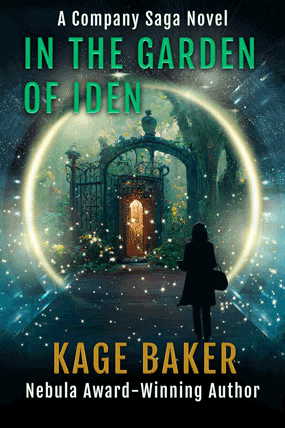
This all-new Kage Baker Bundle presents ePub books of historical time-travel science fiction novels and stories in the "Company" series by Kage Baker (1952-2010) published by Simon & Schuster.
Bundle of Holding: Kage Baker
Question about typical print runs for daily newspapers
Aug. 27th, 2026 11:45 pmalnaperera posting in ![[community profile]](https://www.dreamwidth.org/img/silk/identity/community.png) little_details
little_detailsHi,
My setting is fantasy so this doesn't have to be super accurate, but I'm trying to find out the kind of timelines and deadlines that were involved in newspapers that were printed twice daily. What I'm specifically trying to find out is when news about something that happens at 3-4am would reach the daily paper and when that edition of the paper would be available, in a typical scenario.
I am also interested in the normal timelines attached to this and the factors that affect it, so any information you can throw my way about it would be much appreciated.
Thanks!
My setting is fantasy so this doesn't have to be super accurate, but I'm trying to find out the kind of timelines and deadlines that were involved in newspapers that were printed twice daily. What I'm specifically trying to find out is when news about something that happens at 3-4am would reach the daily paper and when that edition of the paper would be available, in a typical scenario.
I am also interested in the normal timelines attached to this and the factors that affect it, so any information you can throw my way about it would be much appreciated.
Thanks!
The Fall of Hyperion (Hyperion Cantos, volume 2) by Dan Simmons
Aug. 27th, 2026 07:46 amjames_davis_nicoll
The conclusion to the cosmic epic that that would nevertheless have two more volumes.
The Fall of Hyperion (Hyperion Cantos, volume 2) by Dan Simmons
Within - without
Aug. 27th, 2026 04:52 amviridian5
I did my usual iMusic Shuffle thing to try to come up with a title for a WIP, and one of the first songs that came up was Pigface's "Hips, Tits, Lips, Power," which is way too aggressive for a PG-13-rated gen fic, Shuffle, but gave me a smile, especially since it kind of applies a little bit. Especially gave me a smile since it came on not long after KMFDM's "Come On -- Go Off."
I'm currently leaning toward "Go Off" being the WIP's title, so it continues to be helpful.
The DW icon doesn't reflect the fandom or content involved, I just like it.
I'm currently leaning toward "Go Off" being the WIP's title, so it continues to be helpful.
The DW icon doesn't reflect the fandom or content involved, I just like it.
Daily Happiness
Aug. 26th, 2026 10:02 pmtorachan1. Got my hair cut this morning. It wasn't feeling overly long before my appointment, but is still an improvement post-cut in this heat. Any little bit helps!
2. I had a work dinner tonight and was not really looking forward to it but it turned out all right. Would I rather have been at home? Yes. But I did enjoy myself. And the food (tacos) was good.
The dinner was with a group of people from our parent company in Japan, including a bunch of people who were interested in working in the US, but also some higher-ups, which happened to include a guy who had worked here for several years when we were first bought out and it was nice to see him and say hi again after so many years.
3. Gemma's hiding out in the closet.

2. I had a work dinner tonight and was not really looking forward to it but it turned out all right. Would I rather have been at home? Yes. But I did enjoy myself. And the food (tacos) was good.
The dinner was with a group of people from our parent company in Japan, including a bunch of people who were interested in working in the US, but also some higher-ups, which happened to include a guy who had worked here for several years when we were first bought out and it was nice to see him and say hi again after so many years.
3. Gemma's hiding out in the closet.
The Black Ball (d: Javier Carlo and Javier Ambrossi, 2026)
Aug. 27th, 2026 12:18 pmcaramarieThis originally didn’t make it off the film festival long list because it was over 2 hours, but then I felt bereft with nothing to see on Sunday, and figured at least this tied in with my uni course. (If you’re wondering why my course covers both Hiroshima and the Spanish Civil War, the overarching topic is transitional justice and historic memory.)
The movie covers three timelines – one a young man on the nationalist side during the civil war, who becomes enamoured of the injured republican soldier he’s assigned to guard; one a gay man in 2017, who receives an inheritance from a grandfather he didn’t realise had even been alive; the last a well-off young man blackballed from a casino for his sexuality pre-civil war. (I didn’t realise being blackballed referred to something specific.) The overarching mystery is to work out the connection between these three parts, which, unlike in Silent Friend, are not kept cleanly distinct, sound bleeding from one timeline to another. (It might not be a mystery depending on your knowledge of Spanish queer history.)
( Read more... )
The movie covers three timelines – one a young man on the nationalist side during the civil war, who becomes enamoured of the injured republican soldier he’s assigned to guard; one a gay man in 2017, who receives an inheritance from a grandfather he didn’t realise had even been alive; the last a well-off young man blackballed from a casino for his sexuality pre-civil war. (I didn’t realise being blackballed referred to something specific.) The overarching mystery is to work out the connection between these three parts, which, unlike in Silent Friend, are not kept cleanly distinct, sound bleeding from one timeline to another. (It might not be a mystery depending on your knowledge of Spanish queer history.)
( Read more... )
Wording Again
Aug. 27th, 2026 12:55 amgreen_knightI’ve had Office 2021 for several years. Got my licence from StackSocial, and it’s been fine.
Handed in the previous mss, did not use Word (I keep it for work; I write in Storyist), and the next time I opened word, I was met with a nasty surprise: it did not allow me to make any changes and wanted me to subscribe to Office 365.
I hate subscriptions. I do not want. Especially not since I have a valid licence.
But now my next mss is booked, and I had to solve this.
And thus I did all the troubleshooting that I could. Can’t sign out and re-enter my licence code, can only subscribe to Office 365.
Logged into my MS account and eventually (under ‘subscriptions’) found the option to redownload Office.
Did that. Still fucked.
Went onto the website. There is a helper app, but I could not download it because apparently my account had been blocked for using too many wrong signins (I did not. I also was signed in.)
So, support. A ‘human’ who sounded suspiciously like the last customer service agent I talked on, on Ebay (down to the same phrases) gave me a dl link for a licence removal app (eeeek!) and I installed and ran it, it removed the licence MS no longer recognised, I was THEN asked to sign in again (my previous attempt to sign out had been unsuccessful) and hey presto, licence validated, and I can edit Word docs again. (Have not thoroughly stress tested; one doesn’t at near midnight).
It’s fucked up that MS has a licence removal tool that you need to run and apparently this is a common thing to happen. That’s about the worst validation process I’ve encountered. The whole ‘the paid app and the subscription app are the same thing’ is fucked up anyway.
Anyway. I feel I have achieved an important thing. Hurray.
(Also played table tennis today. With my new bat. Felt rather butter fingered and didn't have the greatest time, partly because of AH behaviour from another player, but got into it after a while and playing with different people.)
Tag is close enough.
Handed in the previous mss, did not use Word (I keep it for work; I write in Storyist), and the next time I opened word, I was met with a nasty surprise: it did not allow me to make any changes and wanted me to subscribe to Office 365.
I hate subscriptions. I do not want. Especially not since I have a valid licence.
But now my next mss is booked, and I had to solve this.
And thus I did all the troubleshooting that I could. Can’t sign out and re-enter my licence code, can only subscribe to Office 365.
Logged into my MS account and eventually (under ‘subscriptions’) found the option to redownload Office.
Did that. Still fucked.
Went onto the website. There is a helper app, but I could not download it because apparently my account had been blocked for using too many wrong signins (I did not. I also was signed in.)
So, support. A ‘human’ who sounded suspiciously like the last customer service agent I talked on, on Ebay (down to the same phrases) gave me a dl link for a licence removal app (eeeek!) and I installed and ran it, it removed the licence MS no longer recognised, I was THEN asked to sign in again (my previous attempt to sign out had been unsuccessful) and hey presto, licence validated, and I can edit Word docs again. (Have not thoroughly stress tested; one doesn’t at near midnight).
It’s fucked up that MS has a licence removal tool that you need to run and apparently this is a common thing to happen. That’s about the worst validation process I’ve encountered. The whole ‘the paid app and the subscription app are the same thing’ is fucked up anyway.
Anyway. I feel I have achieved an important thing. Hurray.
(Also played table tennis today. With my new bat. Felt rather butter fingered and didn't have the greatest time, partly because of AH behaviour from another player, but got into it after a while and playing with different people.)
Tag is close enough.
I linked to this video, but didn't embed it...
Aug. 26th, 2026 03:21 pmTags: